
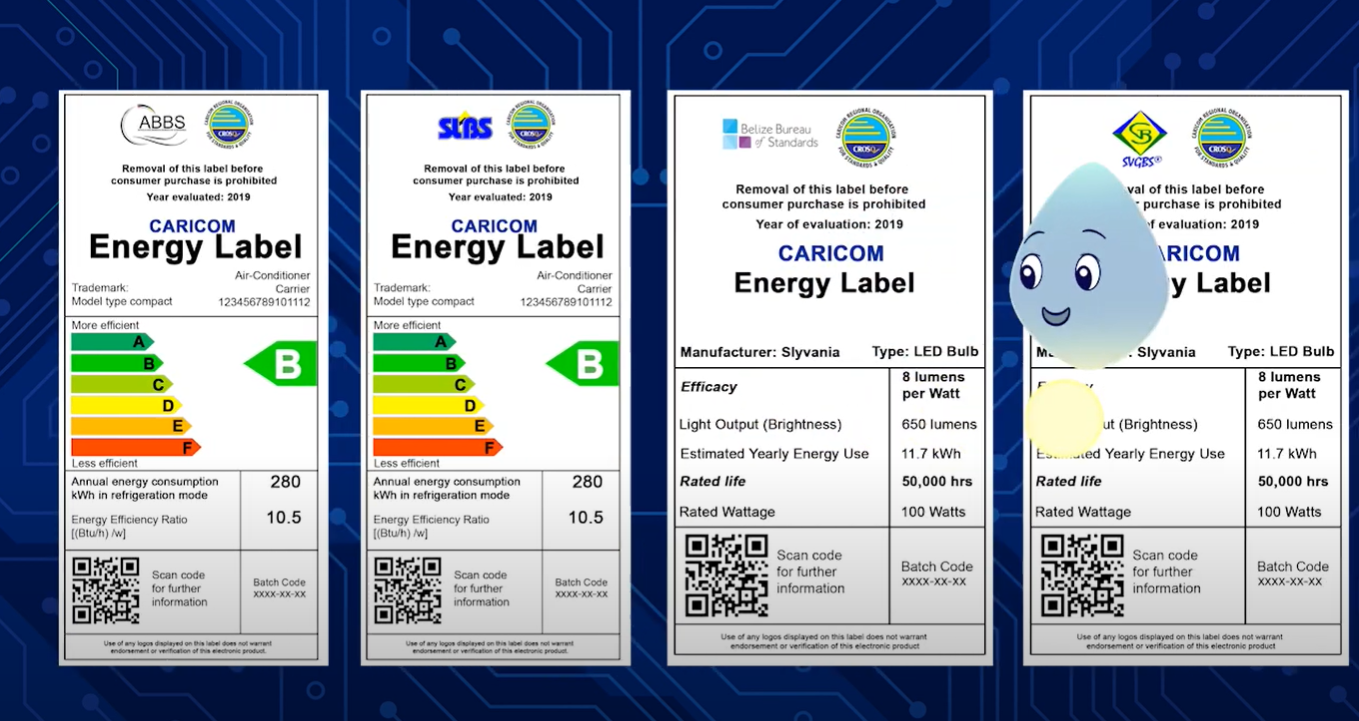
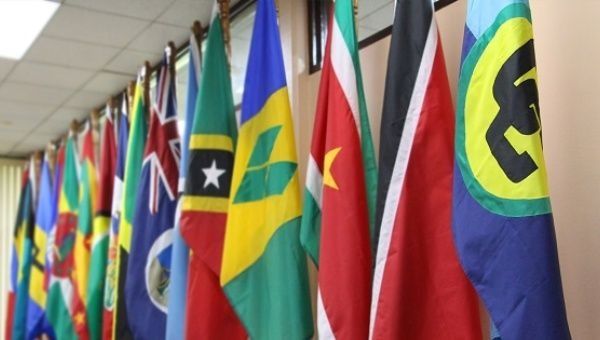

Located in Bridgetown, Barbados, the CARICOM Regional Organisation for Standards and Quality (CROSQ) is an Inter-Gorvernmental Organisation among the fifteen Member States of the Caribbean Community (CARICOM). It is the successor to the Caribbean Common Market Standards Council (CCMSC), and supports the CARICOM mandate in the expansion of intra-regional and extra-regional trade in goods and services. CROSQ is the regional centre for promoting efficiency and competitive production in goods and services, through the process of standardization and the verification of quality. It is mandated to represent the interest of the region in international hemispheric standards work, to promote the harmonization of metrology systems and standards, and to increase the pace of development of regional standards for the sustainable production of goods and services in the CARICOM Single Market and Economy (CSME), and the enhancement of social and economic development. |
|
| How Can the Regional Building Standard Assist Haiti and the Region
|
Monday, 08 February 2010 13:38
The recent catastrophic disaster in Haiti highlights the need for buildings to be constructed to the specifications of an approved and recognized building standard. Evidence indicates that the majority of residential construction in Haiti does not conform to any recognized standards, and in fact, the buildings most affected by the earthquake were not meeting regional or international building standards. Haiti, however, is not the only country in the region with this specific concern.
According to Mr. A. Michael Wood, Project Coordinator of the Regional Building Standards project being implemented by the CARICOM Regional Organisation for Standards and Quality (CROSQ) and funded by the Caribbean Development Bank (CDB), the most residential constructions in the region are not built to standards that are endorsed by regional standards bodies, and a plethora of different standards are used by engineers, which acts as a hindrance to regional standardization. Contributing factors are mainly related to the misconception of substantial increase in the cost of constructing according to a Standard, lack of relevance within the existing international standards to the peculiarities of the region and lack of awareness of the very existence of local standards. The main contributor, however, is the fact that though national standards exist, the use of building standards is not mandatory in many countries. |
|
| SVGBS Hosts Workshop on Laboratory QMS
|
Friday, 05 February 2010 13:04
The Saint Vincent and the Grenadines Bureau of Standards has once again set the standard. This time around they have collaborated with the CARICOM Regional Organisation for Standards and Quality (CROSQ) to host a two day workshop entitled "Laboratory Quality Management Systems (ISO/IEC 17025)". The Workshop was launched in a Press Conference hosted by The Bureau of Standards and held in the Ministry of Foreign Affairs Conference Room on 3 February 2010. It was aimed at raising the standard of various labs in and around Saint Vincent and the Grenadines so that they can be properly accredited.
Executive Director of the Bureau of Standards, Mr. Ezra Ledger said that the ISO/IEC 17025 is recognized as the leader in Laboratory Standards. He added that the standard is not only internationally recognized but also accepted. |
|
| CROSQ Announces Regional Building Code Workshops
|
Wednesday, 03 February 2010 20:38
New construction building standards written with a better understanding of regional natural hazards, such as hurricanes, strong earthquakes, and floods, will provide the Caribbean with a much improved and sustained infrastructure.
The CARICOM Regional Organisation for Standards and Quality (CROSQ) will be hosting 3 one-day workshops on 9-11 March 2010 in Barbados, aimed at providing participants with an opportunity to use and apply modern Flood Hazard Mapping and Rainfall-Intensity-Duration Frequency Curves technologies. |
|
|
|